Island in the stream

January 7, 2019

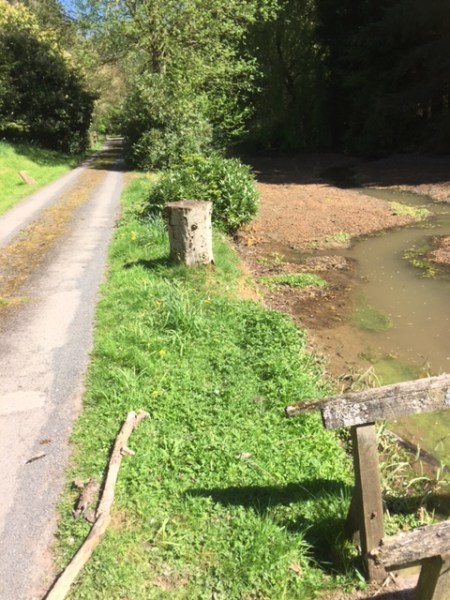
We have a shallow stream running along the edge of the garden and it has a rather muddy little island in the middle of part of it.  It’s fundamentally too small to be really useful.  We tried ducks on it but the stream is too shallow and the fox got the lot within a few days.  We thought about grassing it over and turning it into a seating area but grass needs cutting and we have quite enough of that to be getting on with!

Then, on a trip to the Chelsea Flower Show, we saw a small garden on the theme of an ancient dock.  Suddenly, we saw the potential of edging the island with wood and squaring it off.  From this thought we saw the possibilities of old railway sleepers as an edging material.  The question still remained though about what to put on the island itself.  We realised that it had to be hard landscaping of some sort and not without reservations, we chose decking.  The best feature of decking is that it could be suspended over our dome-shaped island and thereby create a flat surface.  It’s also low maintenance and cheap.


Finally, inspired by various garden visits, we thought that the edges of the decking had to be softened, with marginal planting.  Hence, we decided to leave a soggy border between the railway sleepers and the decking.  If this plan comes off, we hope that the decking will look as if it is ‘floating’ on the planting.


Time to bring in the tender plants

November 10, 2017

garden.pelargonium

Although there is still a little colour left in some of them (I photographed these ivy-leaved pelargoniums this morning), we’ll be putting to bed our tender perennials this weekend.  Dahlias and cannas are simple enough to deal with, we sometimes just move their pots into the polytunnel or greenhouse and leave it at that.  If we need the pots for spring bedding however, we wrap the tubers in newspaper or put them in old compost.  More difficult, in our experience, is over-wintering pelargoniums.  Invariably, we lose several to fungal attacks.  I suspect our polytunnel may be too prone to condensation but even plants left in the greenhouse are not immune to the fungal blight.  I suspect that the answer lies in some happy balance of minimal watering vs. complete drought, which we at least, have yet to stumble upon.

Using wood ash

November 9, 2017

garden.woodburnergarden.woodburner

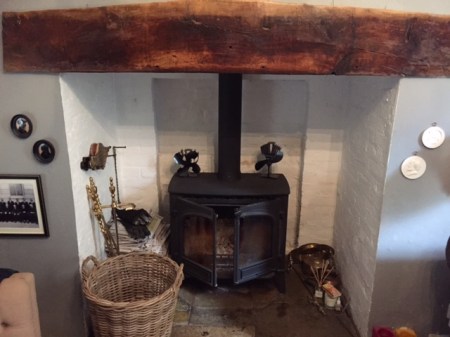
We have a couple of wood burners that are heavily used from autumn until spring.  They produce a lot of wood ash.  An awful lot, in fact.  The wood is all untreated (much of it having been cut from our own trees) and it is therefore perfectly safe to use on the garden.  The soil here is heavy clay.  It is highly fertile (our local farmer delights in saying that “You can shove a stick in ‘ere and it’ll sprout”) but hard to work and becomes absolutely saturated in wet weather.  It is also slightly acidic.  Wood ash is ideal: it is alkaline and therefore raises the soil pH but it is also gritty and helps to build some structure.  Best of all, it’s basically free.  We put small quantities of ash onto our compost heaps but most of it is spread directly onto the borders to work its magic.

Autumn jobs

October 29, 2017

garden.spade

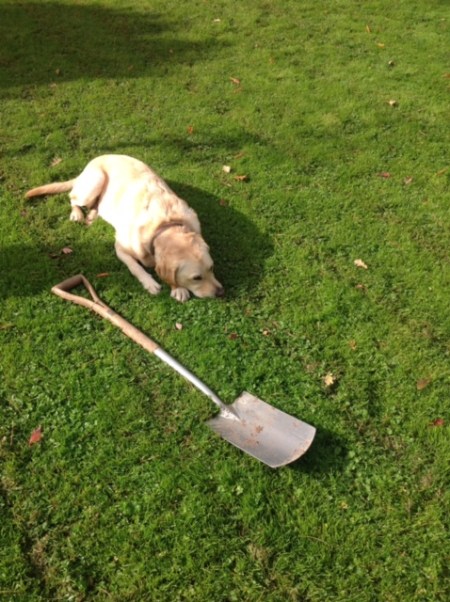
Another gloriously sunny Autumn day here, perfect for more bulb planting.  Today it was another 50 tulip ‘China Pink’, which we’re trying to naturalise in lawn, under and around some Acer ‘Griseum’.  This may be an optimistic ambition, we’ll see.  Also welcomed into the garden today has been Rosa ‘Moyesii Geranium’, a spectacular shrub rose.  Like the tulips, we’re growing this in the lawn, in a small group with other shrubs roses.  These ought to become very big plants and will (hopefully) provide interest in early Summer, when the garden pauses between Spring bulbs and the herbaceous perennials of the later season.

A kind stranger

October 27, 2017

Wharf House 1960.jpg

A very kind stranger has sent us this picture of our house (and a very small part of the garden), taken nearly 60 years ago.  The house is rather different now but the small part of garden one can see here, has completely changed: the land is now on a different level, for one thing.  It’s rather odd to think that, well within the lifetime of many of our neighbours, this garden has altered so much.  But then that’s the nature of gardening isn’t it?  Constant, ceaseless change.

Twisted hazel

October 26, 2017

garden.hazel.2.png

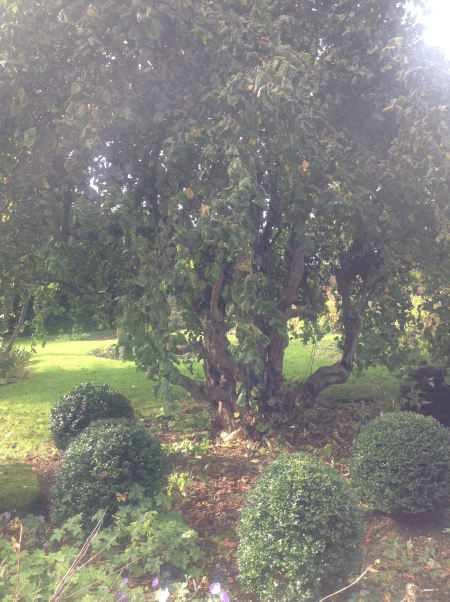
We were lucky enough to inherit this wonderful twisted hazel (‘Corylus contorta’) when we began gardening here.  It really is a stunner, with year-round interest.  It never looks better though, than at this time of year when its whippy base shoots are pruned off, just in time for its winter show of twisted branches.  We keep the off-shoots to be used in various ways; the very twisted ones are excellent for Christmas decorations and the straighter ones make great canes for the vegetable garden.

Blight

October 23, 2017

garden.burner

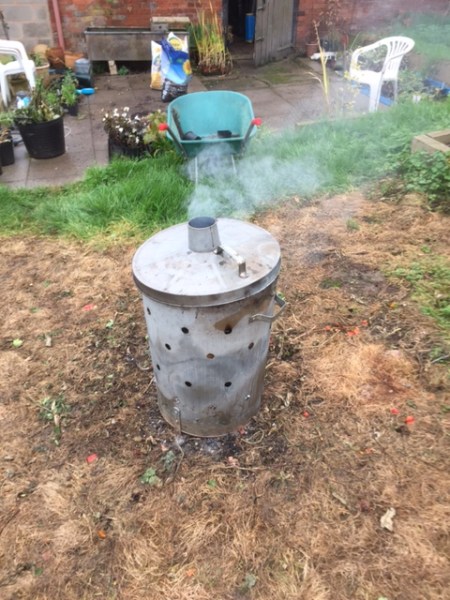
The second half of the summer here, from mid-July onwards, was exceptionally wet.  So wet, in fact, that we got blight on our tomatoes, even though they were in the polytunnel.  The worry now is that we have to pull out and burn all the affected vegetation or risk a recurrence next year.  We long-since gave up trying to grow tomatoes outdoors because of blight infestations and it would be more than a little irritating if we now had the problem indoors as well.  Like so many other growers, for years our tomato of choice has been ‘Gardener’s Delight’ but it may be that we have now to start thinking about more blight-resistant varieties.

A weekend of bulb planting

October 22, 2017

IMG_4056

It’s that time of year.  The bulb order has arrived and it needs to be planted.  We garden on heavy, clay soil, which means that we have to be careful which bulbs we plant directly in the ground.  For the first time, we’ve planted tulips for naturalising this year: ‘China Pink’.  We’ll see how they do.  For the most part though, our tulips are grown in pots.  Painful experience has taught us that the pots need to be ‘defended’ from squirrels and other vermin.  That means we have to cover the pots with fine-mesh chicken wire.  We’re also big fans of ‘Iris Raticulata’ for very early interest.  Again, we plant them in pots and put them in the courtyard outside the kitchen.

A leaky weir!

October 18, 2017


We’re lucky to have a stream running along the southern boundary of our garden.  Our predecessors dug-out a pool, which widens the stream along a stretch of 200 metres or so.  Over the years, on our heavy clay soil, the pool has silted-up and now when the water-level is low in the summer, parts of the pool are above the water-level and have become covered with invasive weeds.  To try to overcome that problem, earlier this year we built up the height of the weir at the down-stream end of the pool and for a time, successfully raised the water-level by several inches.  In recent weeks though, the weir has started to spring new leaks and the water-level has dropped again.  We’re beginning to be at a loss as to how to construct a robust leak-proof weir.  For now, the plan is to throw yet more sacks of concrete at it but without enormous faith that it will do the job.

Daffs …

October 17, 2017

stream.pic

We have a bank on which we’re trying to naturalise daffodils.  In our first year, we went for fancy, double daffs from Parker’s.  They were fine in their first flowering season but have gradually lost their umph in ever since.  Some of them are in part-shade and now come up blind.  Some have died.  There is no (or no apparent) multiplying.  Having tried a number of different varieties, we decided that the bulbs most likely to reproduce and to survive less than ideal conditions (some of the bank is in part-shade, some in full shade and much of it rather damp), was to buy the cheapest bulbs from the wholesaler.  Our reasoning was (is) that the cheapest bulbs are likely to be the most unfussy and the best at multiplying.  We chose ‘King Alfred’, available by the 25kg sack from Parker’s.  It’s early days (the first bulbs  went in in 2015) but early signs are that we may be right.